
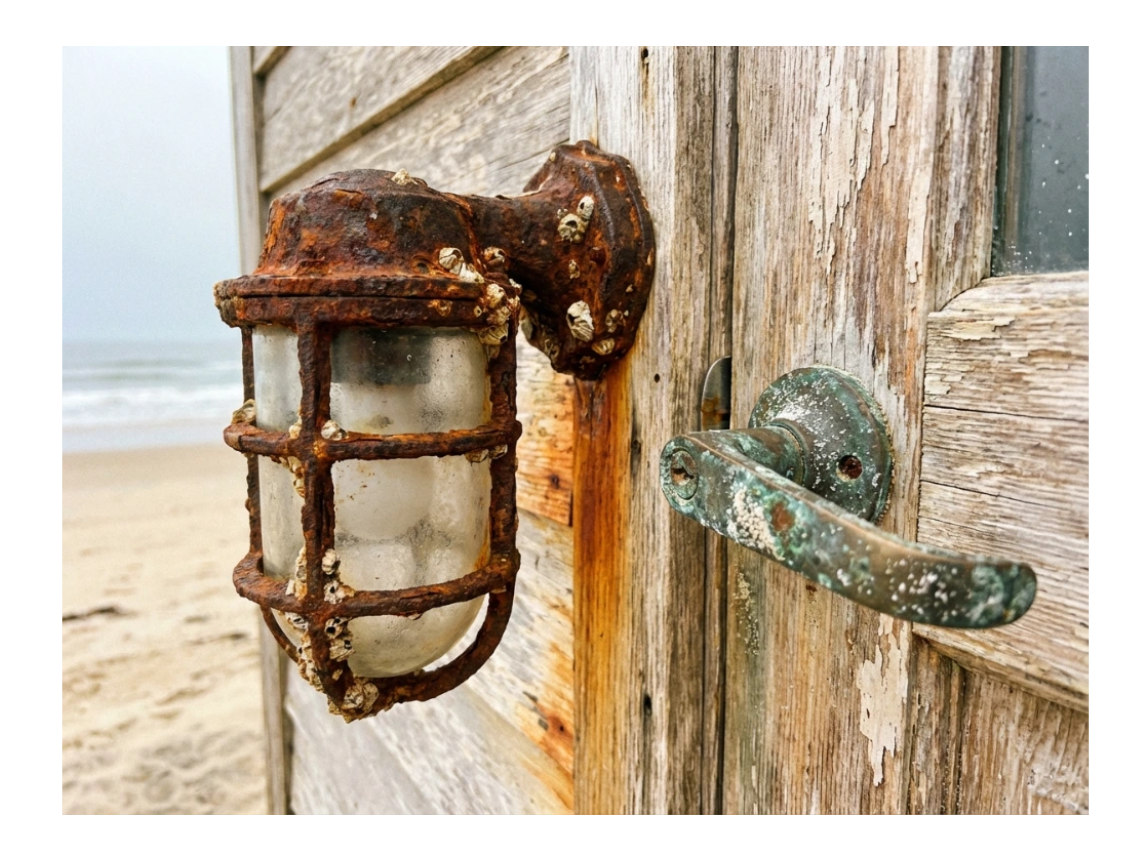
Selling a Coastal Home After Salt-Air Damage: The Smart Weekend Preparation That Could Protect Your Sale
Rusted balustrades, fogged window seals, a tired roof. A weekend of the right prep work can add real money to your final sale price — here's the order to do it in.
There is a reason people dream of owning a coastal home.
The ocean view. The salty breeze. Morning walks along the beach. Sundowners on the patio while the sky turns gold.
But there is another side to coastal living that homeowners—and prospective buyers—cannot afford to ignore.
Salt air is beautiful, but it is relentlessly unforgiving on a property.
Over time, salt-laden moisture, humidity, wind and rain can accelerate deterioration of metalwork, window components, protective coatings and roofing materials. Coastal Property Group notes that salt in the sea air can accelerate wear on paintwork, metal fixtures and even structural elements, making regular inspection particularly important for seaside properties.
If you are preparing to sell your coastal home, that matters.
A buyer may not notice every sunset your home has given you—but they will notice a rusty balustrade, a difficult-to-open sliding door or a roof that looks as though it has been neglected.
The good news is that you don't necessarily need a major renovation.
A focused weekend of preparation can dramatically improve the way your property presents—and remove some of the small warning signs that can make buyers nervous about larger, hidden costs.
First impressions start outside
Before you worry about staging the lounge or arranging the perfect dining table, step outside.
Walk around your property slowly and look at it through the eyes of a buyer.
What looks tired?
What looks neglected?
What immediately suggests "maintenance"?
Pay particular attention to balustrades, gates, exterior light fittings, garage doors, balcony hardware, roof components, window frames and exposed fixings.
Rust is one of the most obvious visual reminders of coastal exposure.
According to Coastal Property Group, regular exterior inspections should specifically look for corrosion on metal features such as gates, railings and balconies, as well as cracking or peeling paint that may indicate deterioration underneath the surface.
That gives you your first priority:
Deal with the visible maintenance issues before the buyer does.
Light surface corrosion may be suitable for cleaning, preparation and an appropriate protective coating. However, badly corroded or loose structural components should not simply be painted over. A balustrade, railing or structural element that has deteriorated should be assessed by a suitably qualified professional.
The objective isn't to disguise a problem.
It is to demonstrate that the property has been properly cared for.
Your windows could be saying more than you realise
Coastal homes often feature large windows and sliding doors designed to capture the spectacular surroundings.
And that is a major selling point.
But those same openings are exposed constantly to salty, wind-driven moisture.
RGA Window and Door Systems describes homes close to the beach as being exposed to a particularly corrosive environment, with salt-laden moisture and wind-driven sand affecting window and door components. Its coastal maintenance policy recommends regular fresh-water rinsing of exterior frames and components to reduce salt and dirt accumulation.
So before your photographs are taken, clean those windows thoroughly.
Rinse away salt residue. Clean the frames. Clear the sliding tracks. Check handles and locks. Inspect seals and weather-stripping.
Then look closely at the glass itself.
What if the glass is fogged?
This is an important distinction.
If condensation is between the panes of a double-glazed window, it isn't simply something you can wipe away.
Research published by the National Research Council of Canada discusses failure of factory-sealed double-glazing units and the resulting condensation within the sealed cavity.
More recently, This Old House similarly explains that moisture appearing between double- or triple-glazed panes generally indicates failure of the seal surrounding the insulated glass unit.
For a seller, the message is simple:
Don't ignore fogged glass.
Ask a qualified glazing professional to assess it. Depending on the window system and the extent of the failure, replacing the affected glass unit may be possible without replacing the entire frame.
That can turn an unattractive defect into a relatively contained repair—and, more importantly, prevent a buyer from wondering what else has been neglected.
Then look up: your roof deserves attention
A roof is one of those things buyers rarely want to think about after purchasing a property.
They want to know it works.
They want to know rain isn't coming through.
And they certainly don't want to inherit a major repair bill.
Coastal Property Group recommends checking roofs for loose, missing or damaged roofing materials and ensuring gutters and downpipes remain clear, because blockages can contribute to water damage.
Coastal conditions can be particularly demanding on exposed metal components and fixings. A 2026 South African construction-maintenance publication highlights salt-laden air and moisture as factors that can accelerate corrosion of exposed steel components, including roof sheeting and fasteners.
Before selling, inspect what you safely can from ground level.
Look for:
Rust or corrosion
Damaged or missing roof components
Deteriorated flashing
Blocked gutters
Damaged downpipes
Peeling or failing protective coatings
Signs of water ingress
If you see something concerning, don't climb onto the roof and attempt a risky DIY repair simply to prepare the property for sale.
Bring in a qualified roofing professional - ask your agent to recommend you one in your area.
A small professional inspection today may be considerably less stressful than a buyer's inspection report raising the same issue later.
Clean away the "coastal maintenance" look
This may be the simplest—and most rewarding—part of the preparation.
Coastal homes accumulate salt.
RGA Window and Door Systems specifically recommends fresh-water rinsing because salt and dirt build up on exterior window and door frames and components.
So give the exterior a refresh.
Clean suitable exterior surfaces, windows, frames, patios, doors and balustrades. Remove accumulated grime from tracks and corners. Clean outdoor furniture. Clear gutters. Tidy the garden. Wash the entrance and make the front door feel welcoming.
You're not trying to make the home look artificially perfect.
You're revealing its best features.
The ocean view should be the hero—not the rust around the balcony.
Don't spend money everywhere—spend it where buyers notice
This is perhaps the most important principle when preparing a coastal property for sale.
You don't necessarily need to renovate your kitchen, replace every bathroom or repaint the entire house.
Instead, ask:
"What would make a buyer hesitate?"
A rusty balustrade?
Fix it.
A fogged window?
Have it assessed.
A difficult sliding door?
Investigate it.
A neglected roof?
Have it inspected.
Dirty exterior walls and windows?
Clean them.
Blocked gutters?
Clear them.
These are relatively focused interventions, but they can change the emotional response a buyer has when they walk through your property.
Because buyers don't only purchase square metres.
They purchase confidence.
The final test: walk through your home like a buyer
Once the work is finished, don't immediately put your house on the market.
Take one final walk.
Start at the pavement.
Walk through the entrance.
Open the front door.
Move through every room.
Open the windows.
Slide the doors.
Look at the ceilings.
Step outside.
Look back at the house.
Ask yourself:
"If I were considering spending my money on this property, what would worry me?"
Those are the issues to address first.
Your goal is not to hide the fact that the home lives beside the ocean.
Quite the opposite.
Your goal is to make the buyer fall in love with the coastal lifestyle without becoming distracted by the maintenance that comes with it.
A coastal home should sell the dream—not the damage
Living beside the sea is a privilege.
And when the time comes to sell, the strongest presentation is one that reminds buyers exactly why coastal property is so desirable: the lifestyle, the light, the views, the fresh air and the extraordinary sense of escape.
Salt air may be relentless.
But with the right preparation, your property's first impression doesn't have to show it.
Before you list, take a weekend.
Inspect. Clean. Repair. Refresh.
Then let your home do what it was designed to do:
Make someone fall in love with coastal living.
Professional References
Coastal Property Group, Combating Coastal Corrosion: Maintenance Tips for Seaside Properties (19 April 2024). The article discusses the effect of saltwater and high humidity on coastal properties and recommends regular inspection of exterior metalwork, protective coatings, windows, roofs, gutters and drainage systems.
RGA Window and Door Systems, Coastal Homes Cleaning and Maintenance Policy. RGA explains that salt-laden moisture and wind-driven sand can accelerate deterioration of window and door components and recommends regular fresh-water cleaning and visual inspection of coastal frames and components.
National Research Council Canada, Performance of Sealed Double Glazing Units. This research examines seal failure in factory-sealed double-glazing units and the relationship between seal performance, moisture and condensation within the glazing cavity.
Construction Cape Town, Corrosion-Resistant Fasteners for Coastal Structures (2026). The publication discusses how salt-laden air, moisture and coastal exposure can accelerate corrosion of exposed fasteners and other components used in building systems.
This Old House, How to Repair Fogged Windows in Your Home (updated 13 April 2026). The guide explains that moisture between double- or triple-glazed panes generally indicates failure of the sealed glazing unit and discusses repair and replacement considerations.